Beyond These Stars beginner guide
Land, connect the basics, and keep everyone fed and rested before you expand. The starting spaceship covers wood, stone and iron — food and water are on you.
Your first days on Kewa are mostly about two things: keeping food and water flowing, and keeping peeps rested enough not to get sick. Everything else — factories, plans, the galaxy — comes after those two are boring and automatic.
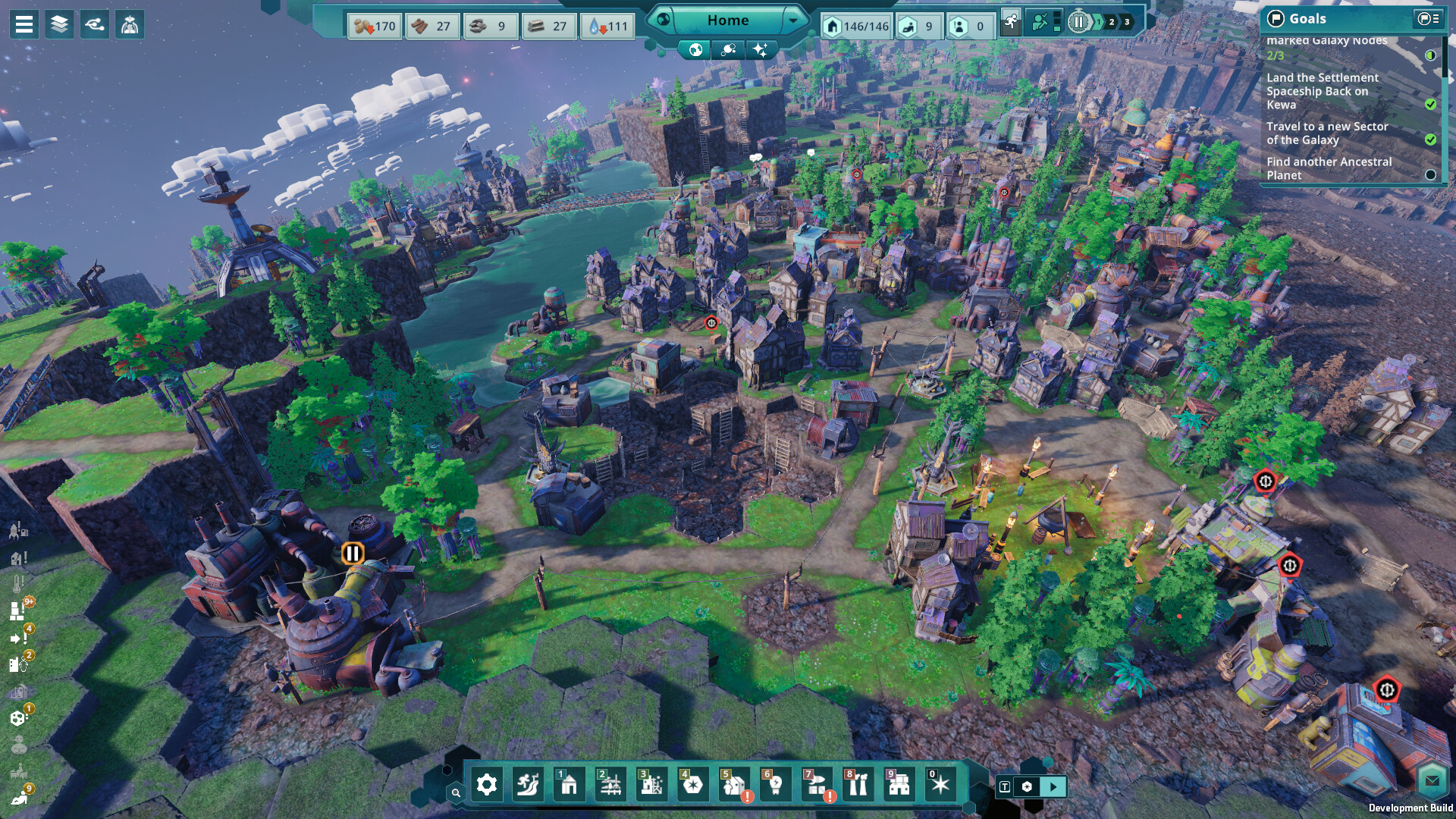
The first ten minutes
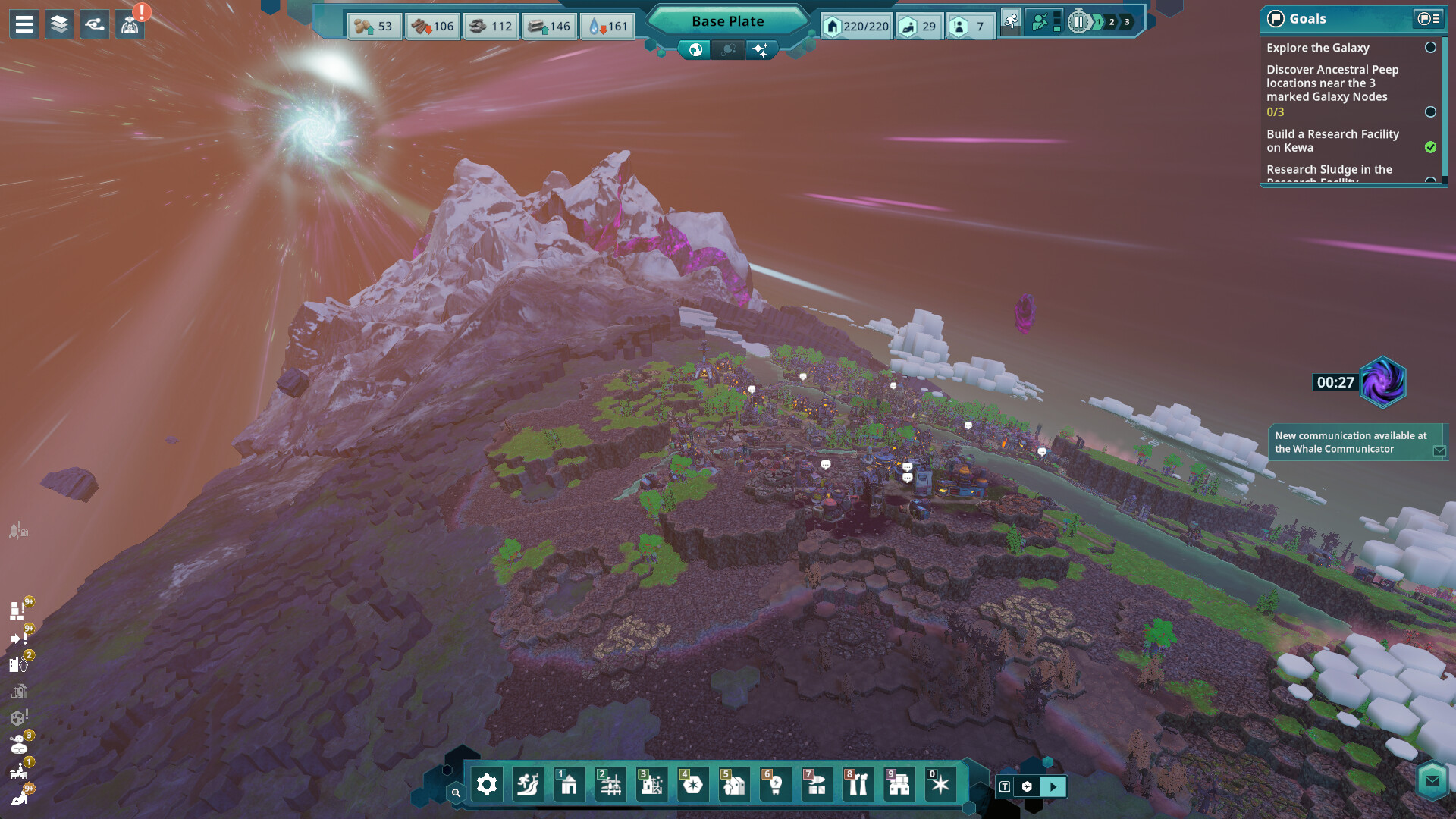
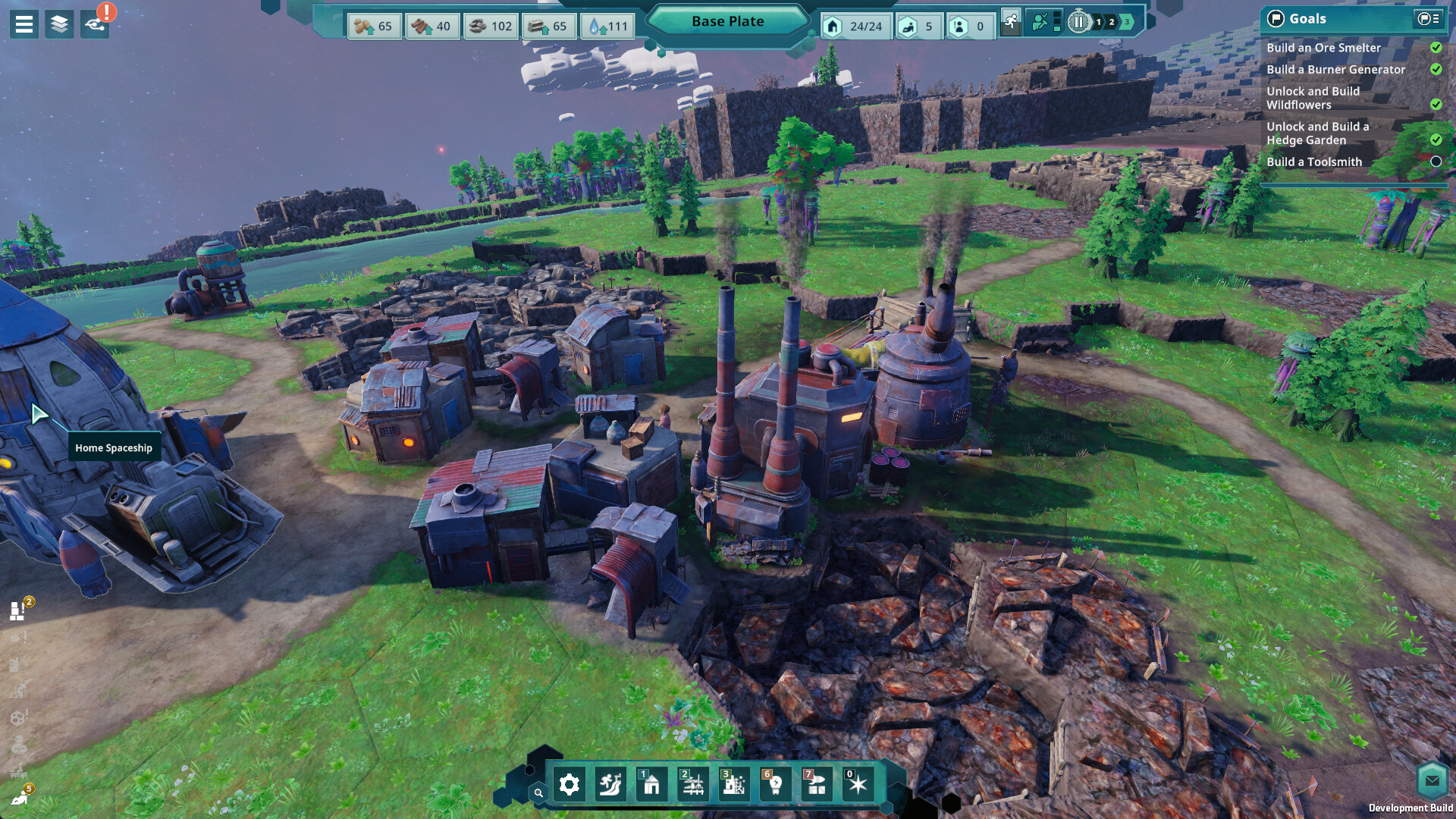
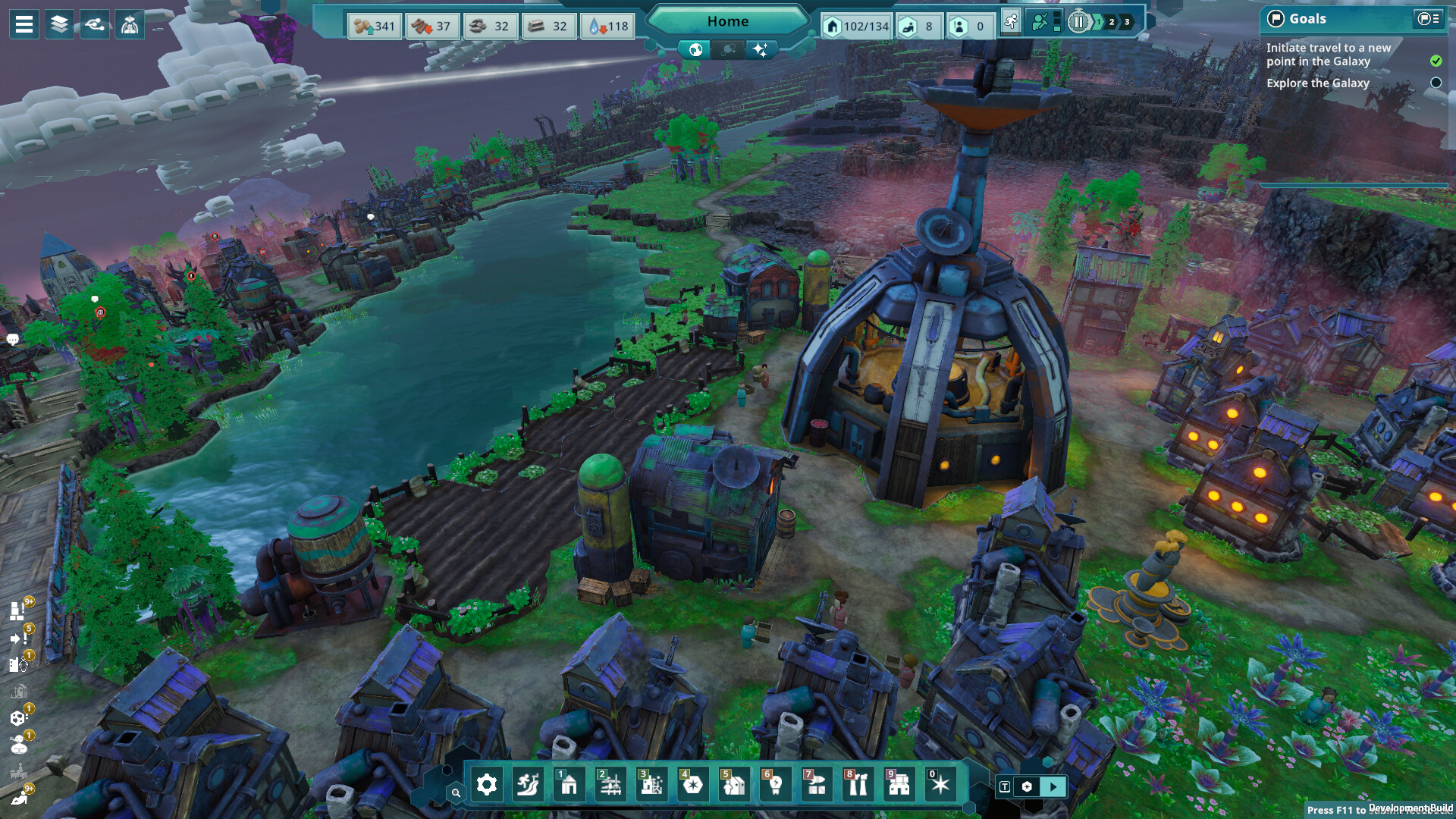
You arrive on Kewa's back with a Home Spaceship and a small crew aboard. When you land, three peeps emerge first — they are your starting workforce. The rest of the initial population of 30 stays aboard until you build enough homes that they would not be homeless.
Your opening moves, in order:
- Place water pumps near a river or lake — peeps drink from day one.
- Lay out potato patches and a hut cluster for your first households.
- Connect things so peeps can walk: most buildings want road access, and peeps pick jobs within walking distance of home.
- Watch the top resource bar — food and water numbers falling faster than they rise is the first fire you will ever fight.
Your starting kit — what the spaceship gives you
The Home Spaceship is a training-wheels economy: it manufactures basic materials while you are still finding your feet.
| From the Home Spaceship | Rate / rule |
|---|---|
| Wood, stone, iron | 10 per minute each |
| Water, potatoes | 3 per minute each |
| Crew capacity | 30 peeps live aboard; 3 emerge when you land |
| Housing gate | First 15 huts house the whole starting crew; beyond that the settlement needs a School to grow |
| Tools | Produced aboard once supplied with wood and iron |
Buildings you construct yourself are how you wean off that drip-feed — see resources and supply chains for when and how the handoff happens.
The 16-tile work rule (the one rule everyone trips on)
A peep will work at any workplace within 16 tiles of their home — no further. They will walk outside that radius to fetch or deliver, but they will not take a job beyond it. Two consequences that matter immediately:
- Where you put houses decides where you can put jobs. A beautiful industrial corner on the far side of town is useless until someone lives nearby.
- When a building underperforms for no visible reason, check its staffing: it may simply be out of any peep's 16-tile reach.
Don't let energy slide into sickness
Peeps have happiness and energy meters. Every shift start, each peep rolls a chance of getting sick — and the lower their energy, the higher that chance. A sick peep stays home from their shifts, which quietly strangles production. If sickness runs long, peeps can die, and the whole settlement takes a happiness hit and a mourning period.
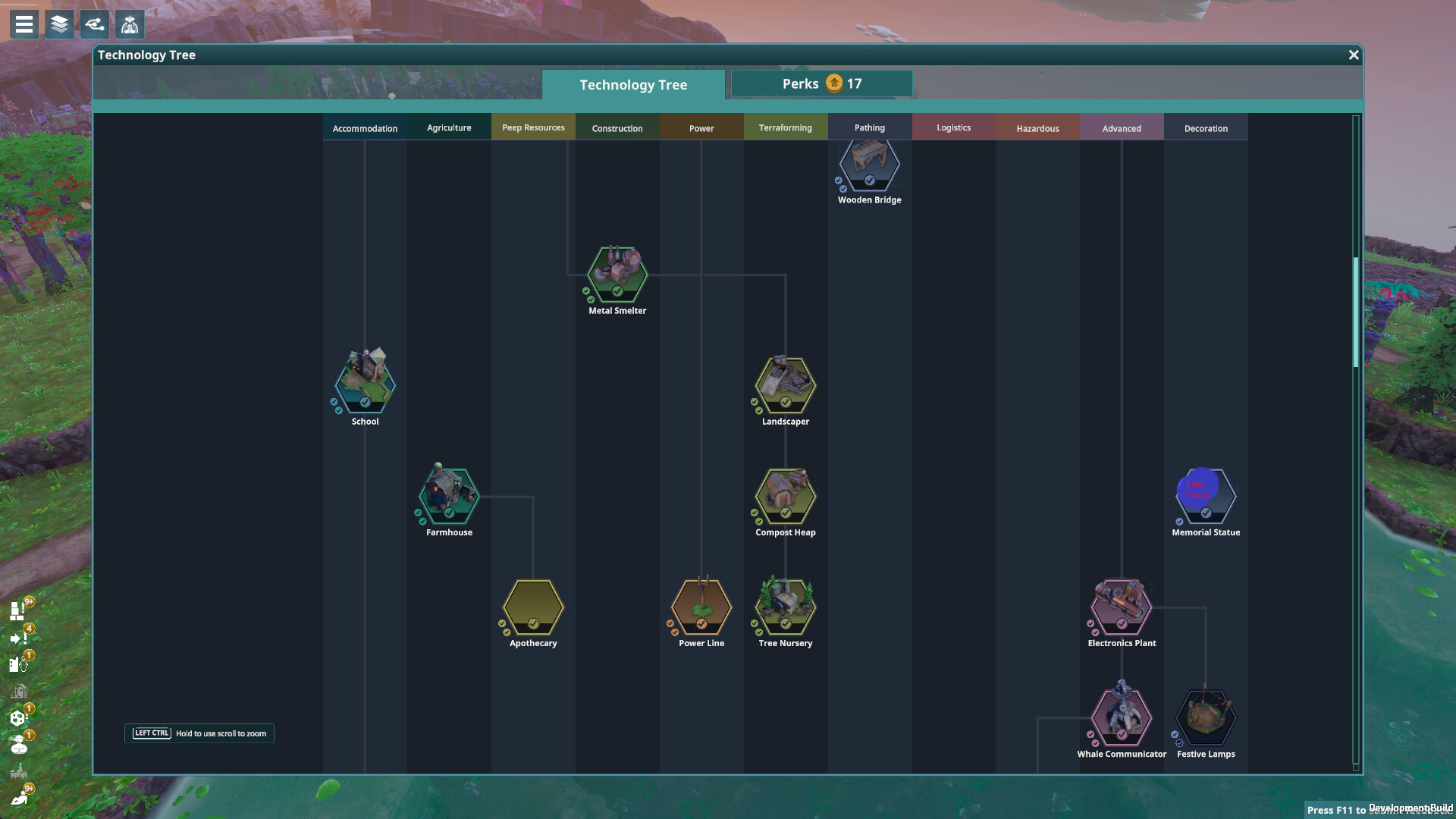
Early fixes: good food (variety helps — potatoes are fine, soup is better), decorations, and not running everyone ragged on back-to-back shifts. The full machinery — the Apothecary, the Memorial Statue, celebrations — is on the peeps guide.
Five first-day mistakes
- Overbuilding before staffing. Every building that stands empty is a building you paid for twice.
- Ignoring the top bar. Food and water surprises arrive late and expensive. Watch the down-slopes.
- No decorations. A couple of benches and trees in the right spots is cheap happiness — and happiness is what keeps strikes away.
- Paving over the biome. Concrete and smoke hurt the whale under your feet; Kewa notices, and Kewa's mood reaches your peeps.
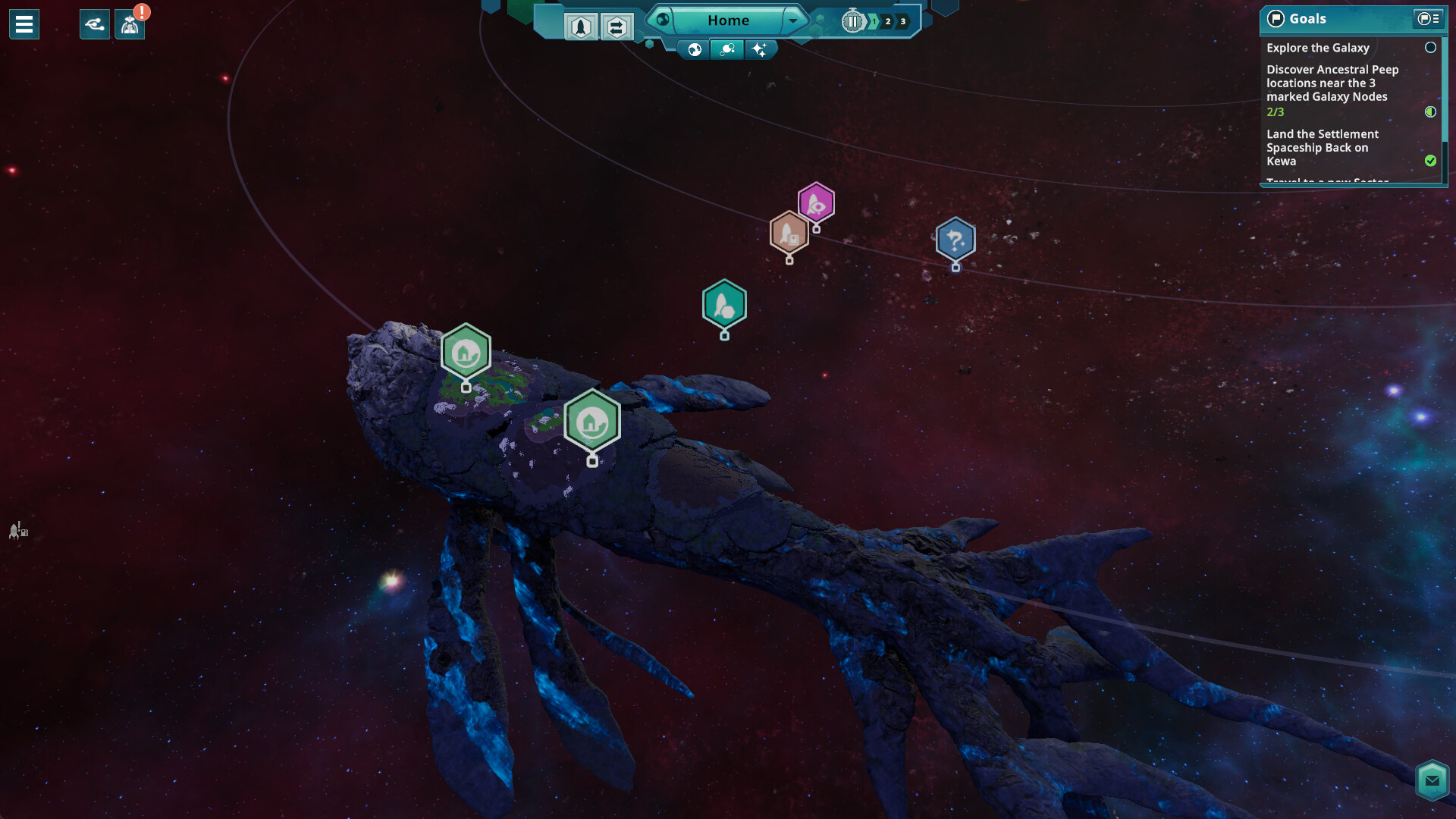
- Forgetting the map. The galaxy is the content: if you never send the scout ship, you never see the planets that fix your food and material bottlenecks.
Next steps
- Ready to tune placement? Read buildings and adjacency.
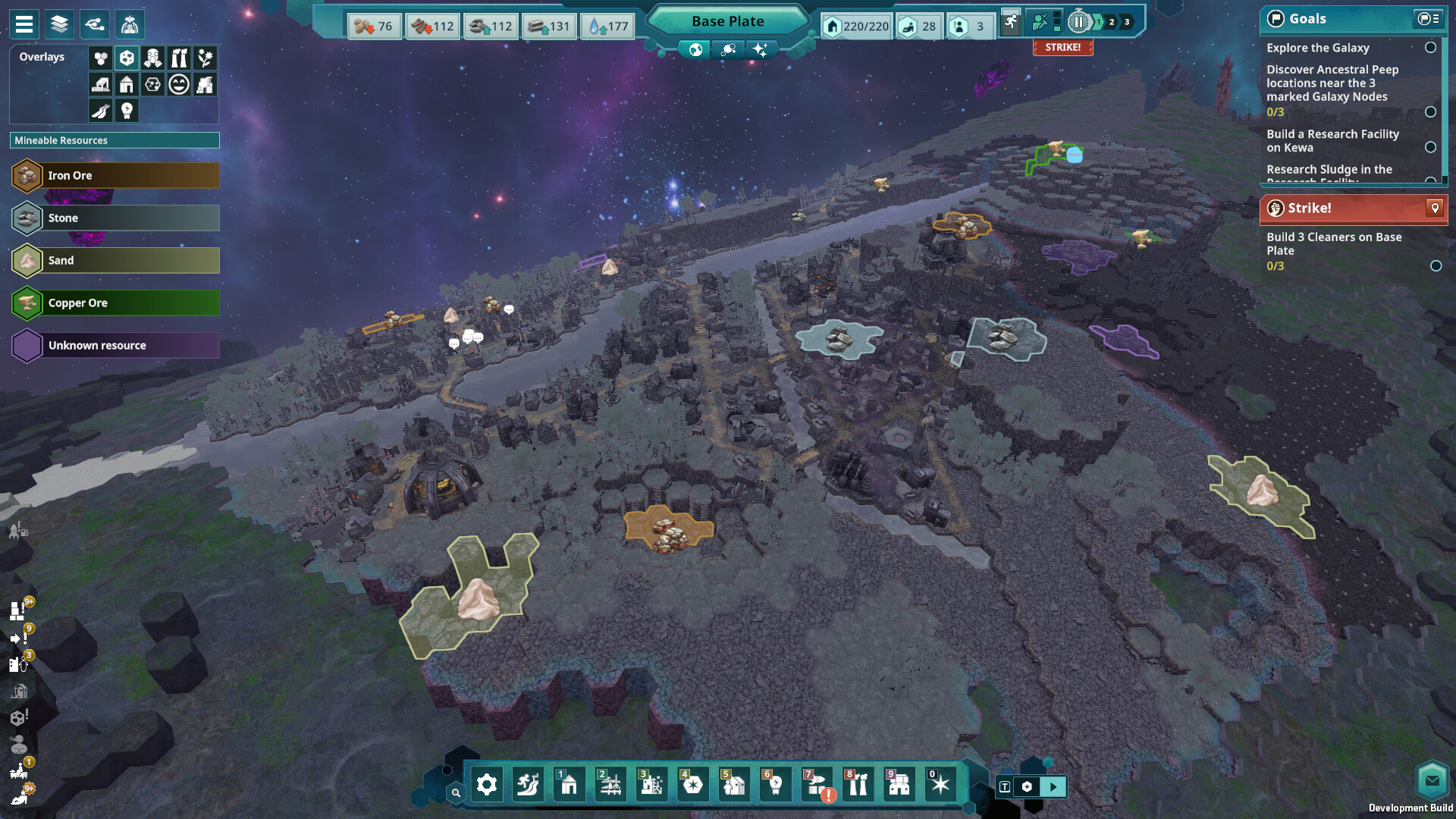
- First strike incoming? Peeps guide explains the recovery.
- Wondering why the whale seems grumpy? Kewa care.