Resources and production chains
The Home Spaceship feeds you wood, stone and iron at first; natural resources, by-products and synthesized goods take over as the city grows. Food and water are produced from day one.
Beyond These Stars starts you with a trickle of materials and ends with planet-side supply chains feeding a city of hundreds. Knowing when each handoff happens is the difference between a smooth ramp and a colony that stalls out waiting for wood.
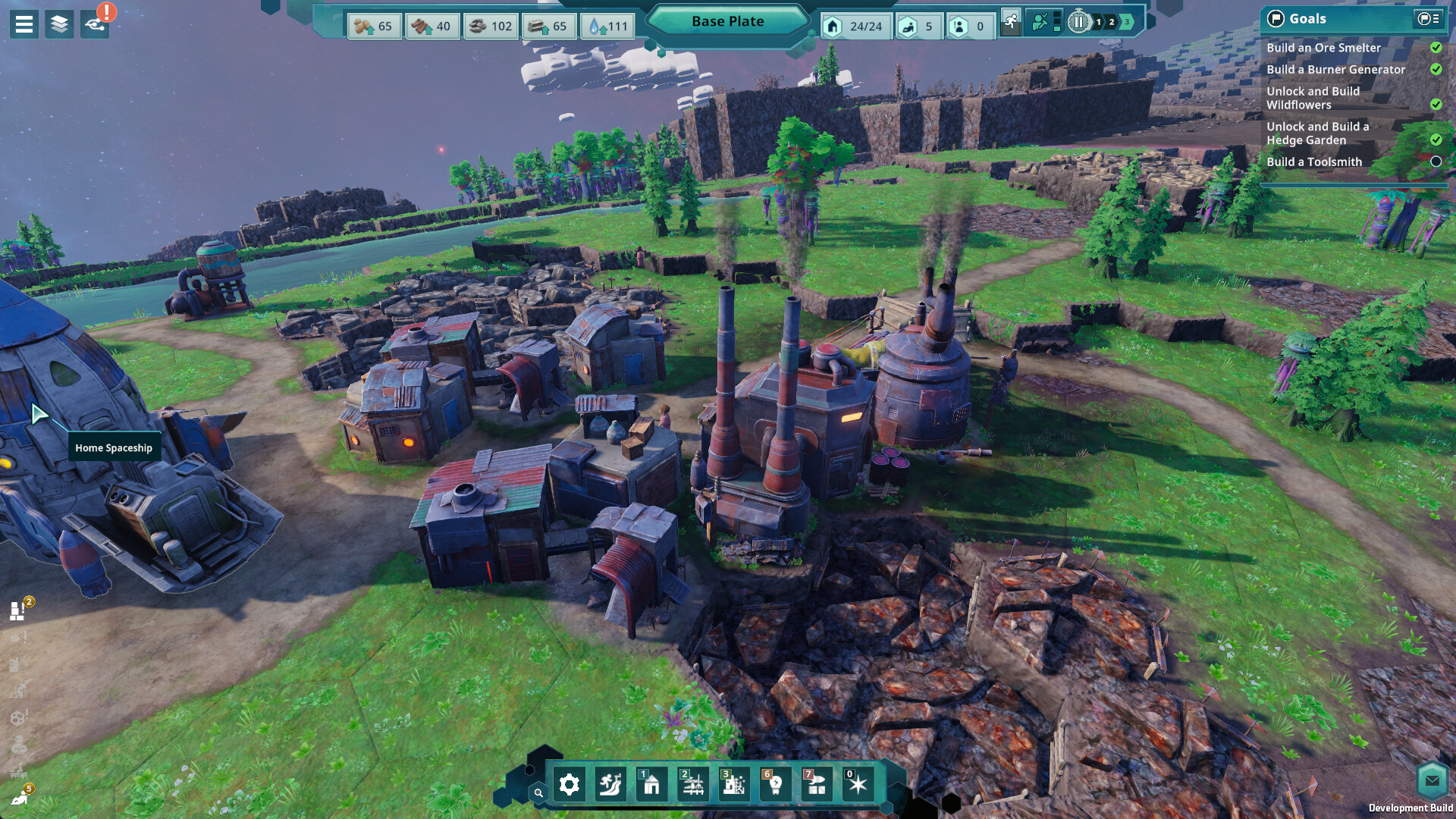
Act one: the Home Spaceship drip
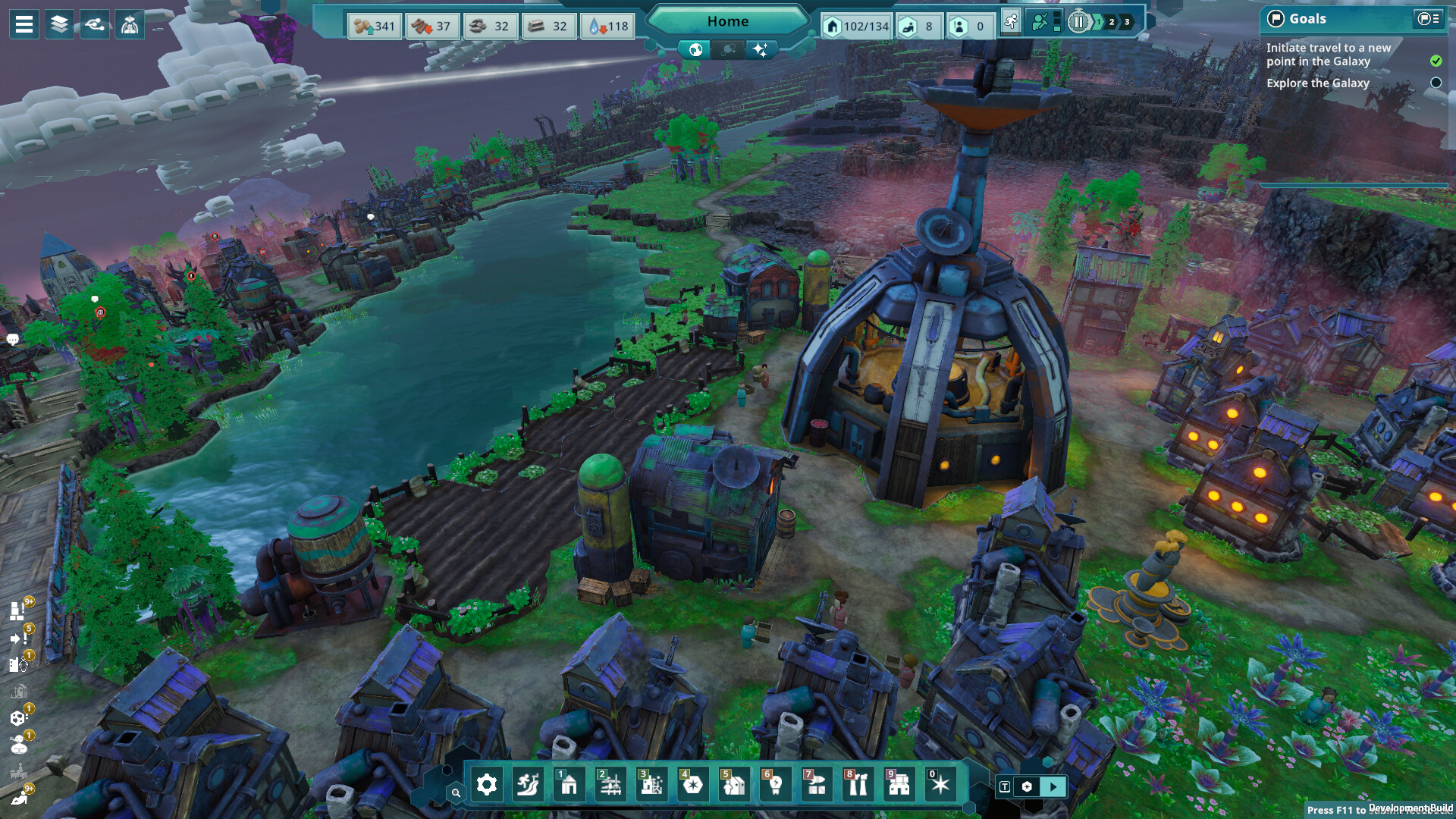
You never truly start from nothing. The Home Spaceship is a complete basic industry that runs while you find your feet:
| Output | Rate | Notes |
|---|---|---|
| Water | 3 / minute | Indefinitely, no inputs |
| Potatoes | 3 / minute | Indefinitely, no inputs |
| Wood | 10 / minute | From tree trunks — needs trees in range |
| Iron | 10 / minute | From raw iron ore — one deposit is always near the landing |
| Stone | 10 / minute | From raw stone — one deposit is always near the landing |
| Tools | — | Produced once the ship is supplied with wood and iron |
Two facts about the spaceship shape your early choices. First, it generates no pollution — which means early on it is also your cleanest toolsmith, worth keeping active for that reason alone. Second, it produces no by-products: the wood waste, soot and slag that real industry spits out simply never appear while the ship is doing the work.
Act two: real buildings and the by-product trade
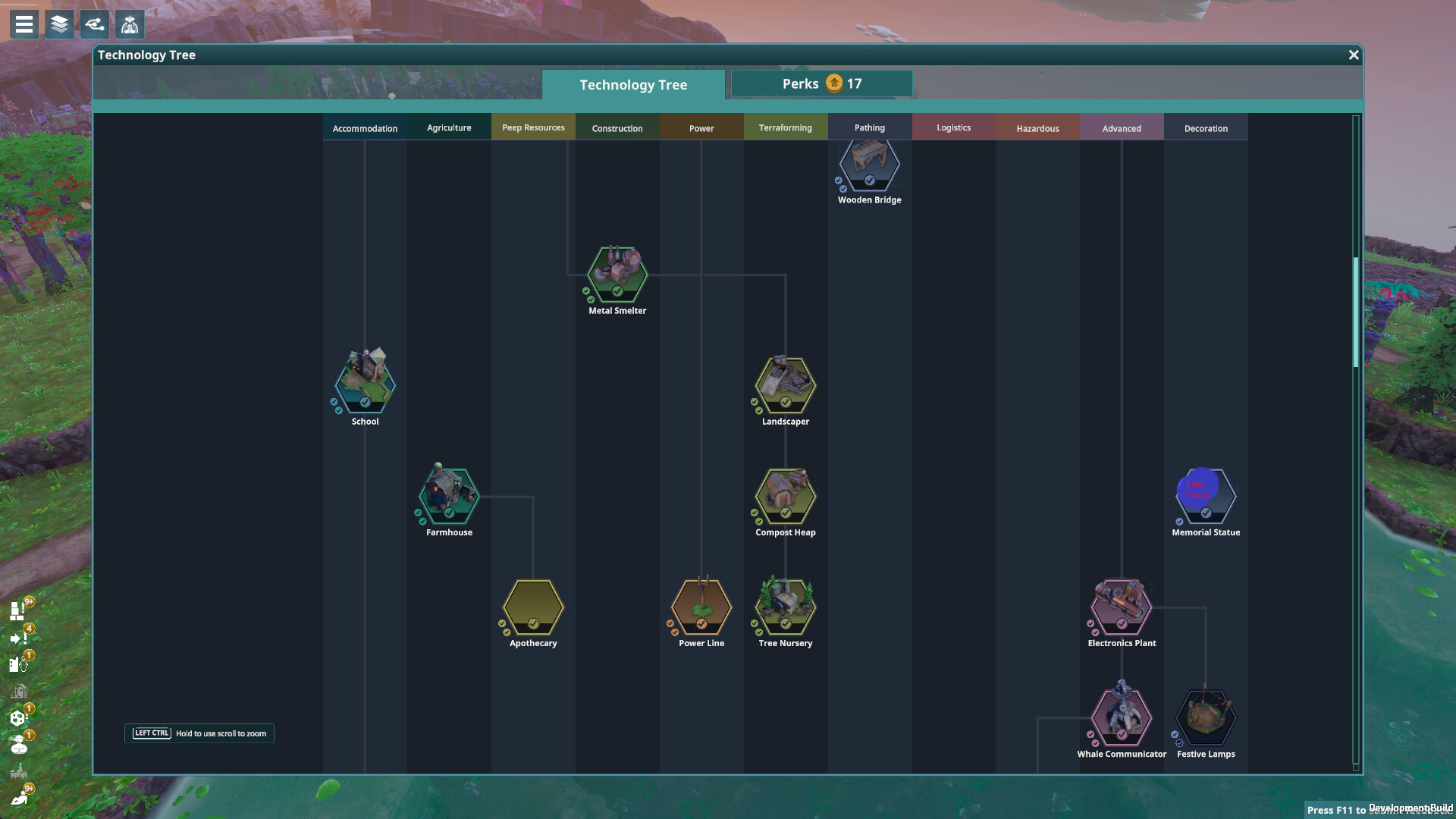
Specialized buildings — the Woodcutter, Ore Smelter, Toolsmith and friends — make wood, stone and iron faster and more efficiently than the spaceship, and they produce the valuable by-products: wood waste, soot and slag respectively. If a later production chain needs those by-products, the standard move is to deactivate the corresponding work aboard the spaceship so all raw resources flow through the real buildings instead.
The trade is real: you lose the no-pollution advantage and take on supply-chain management. By the time you're making that trade, your settlement should be housing all 30 of the starting crew (the first 15 huts) and have a School — that's the growth gate beyond the starting population.
The resource map
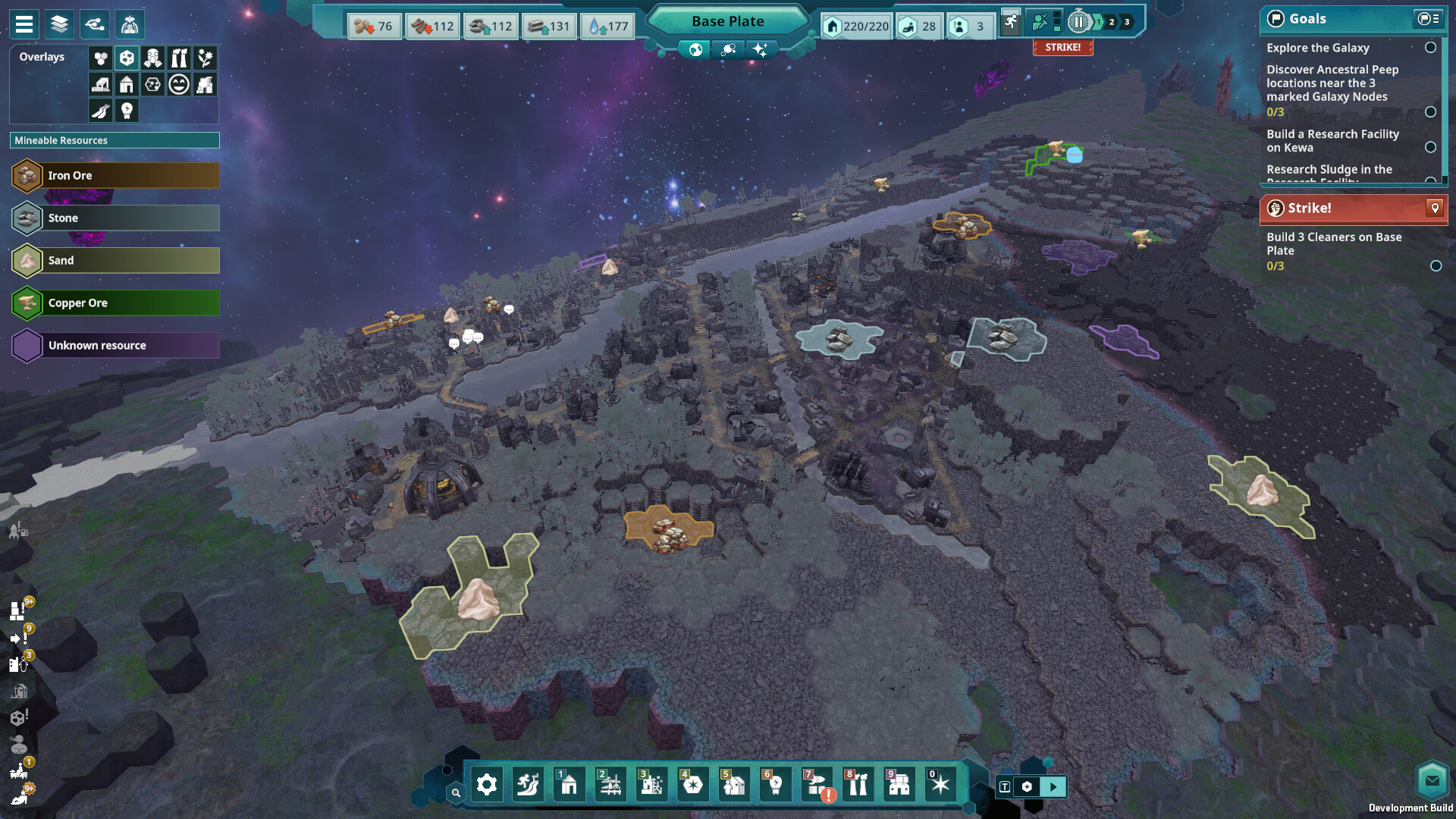
- Natural resources: wood from trees, plus one stone deposit and one iron deposit near the landing, always. As you expand and explore, more appear — including copper, shell and crystal.
- Food and drink: potatoes carry the early game; more valuable meals restore more energy per bite. Planet-side, the Pasture turns animals into milk and eggs, the Orchard adds fruit, and the Trawler works the ocean — with wheat feeding the animals and shells feeding a cement chain.
- Synthesized resources: everything made from simpler inputs by buildings — the full list lives on the official wiki's resources page.
Where storage and roads fit in
Peeps don't teleport materials. They carry them — and they gather food and drink from nearby storage back to their homes so it's waiting during breaks. That's why placement adjacency effects that boost storage (like the Water Pump's +30% surrounded by three water tiles, or the Woodcutter's +30% inside forest) are economy upgrades, not cosmetics. Roads decide which of those trips are short, and the 16-tile work rule decides which jobs each home can actually fill — see the buildings guide and beginner guide.
Early supply checklist
- Keep an eye on the top bar: if wood or stone is falling, the spaceship alone isn't keeping up anymore.
- Build your way toward the Woodcutter → Ore Smelter → Toolsmith chain before you strictly need it.
- Only deactivate spaceship production when you specifically need by-products or need the crew freed up.
- Route food through storage near housing — meals happen at home, and empty homes eat into happiness recovery.
- When a chain stalls, walk it backwards: the paused building is usually the one missing input, not the one that looks busiest.
Next steps
- Buildings and adjacency — where the +30% storage numbers live.
- Planets and outposts — the resources that only exist off-whale.
- Kewa care — why the dirty version of your industry has a cost the top bar doesn't show.