Buildings and adjacency
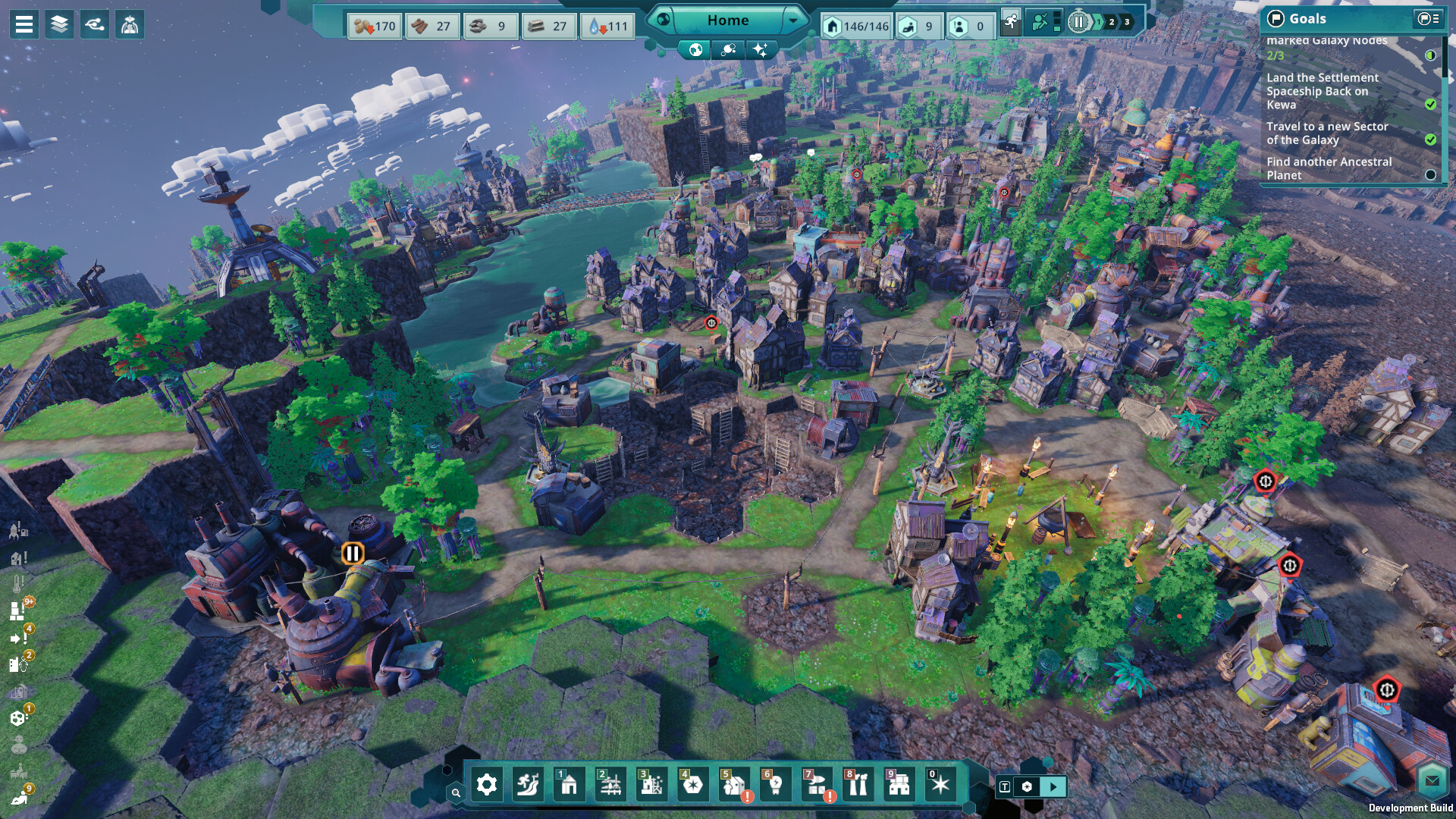
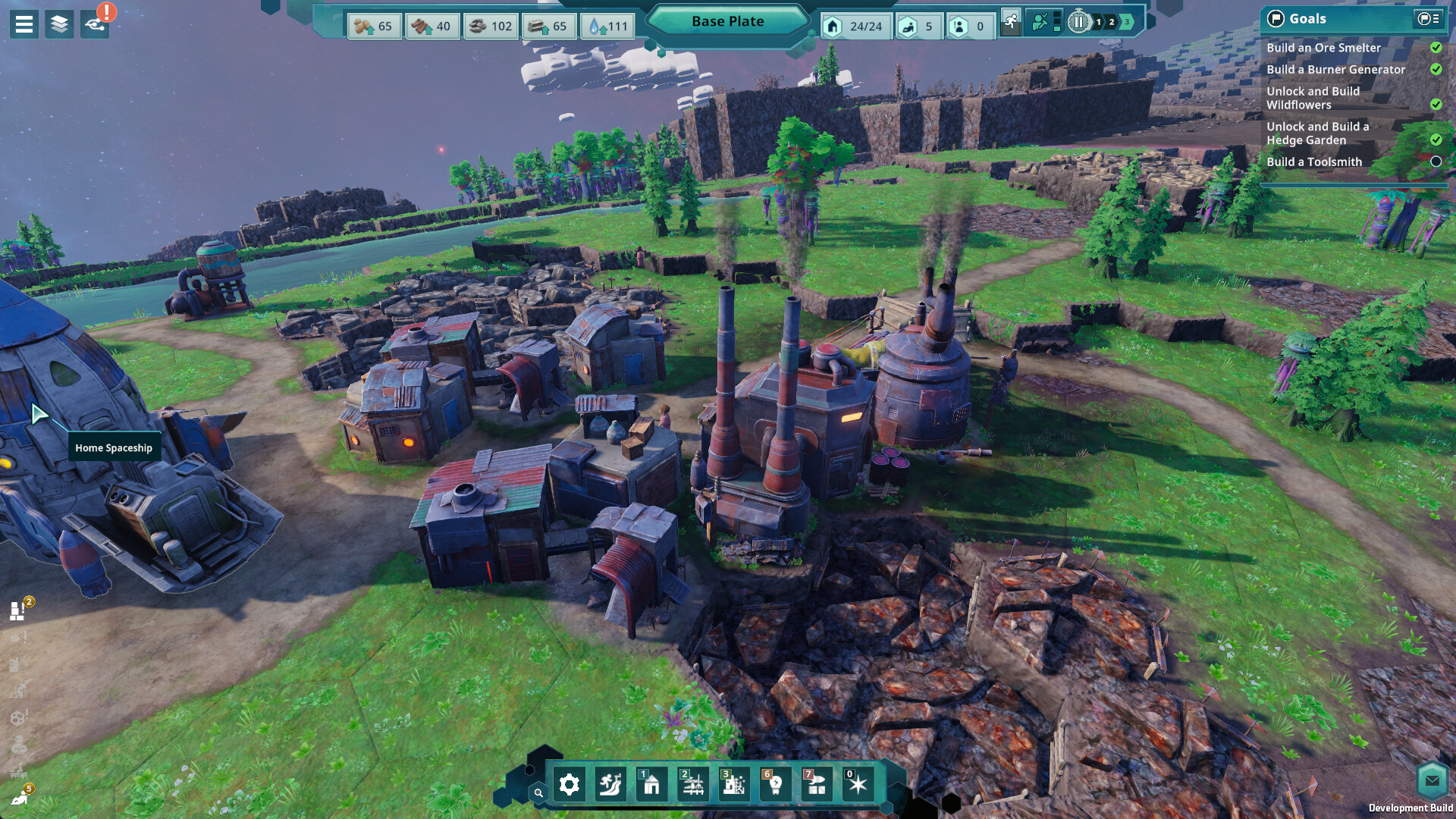
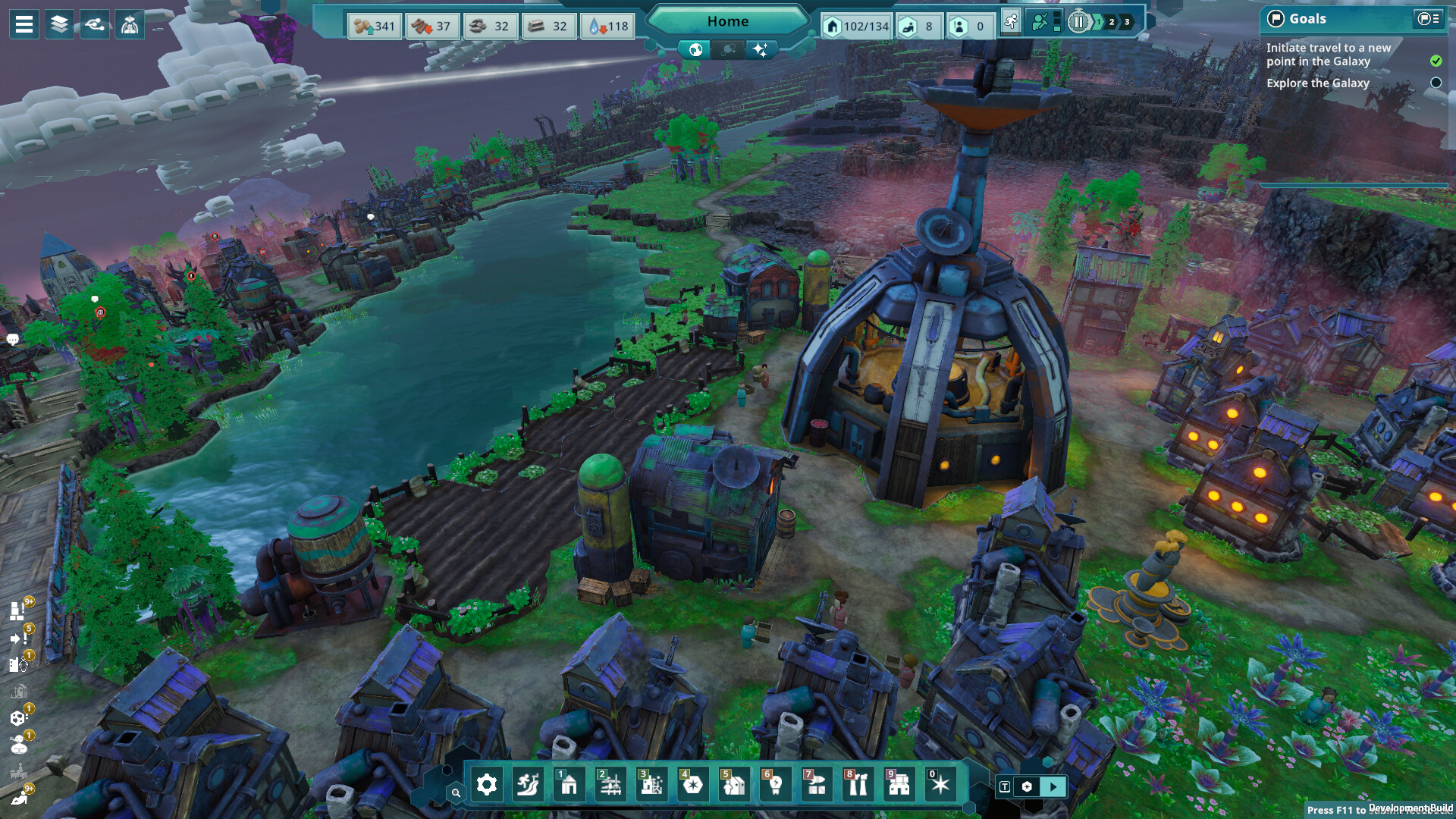
Most buildings care where they stand: water pumps gain storage next to water tiles, huts gain happiness beside potato patches, woodcutters gain storage inside forests.
Buildings are where Beyond These Stars stops being a spreadsheet and becomes a puzzle: what goes next to what changes what each building actually does. The good news is that the early game's adjacency rules are documented and specific — you can plan around them from the first hour.
How construction actually works
- Buildings are placed inside breathable areas and most need road access to be built or to operate. A building that can't reach a road is a very expensive decoration.
- Some buildings have extra placement rules — the Water Pump, for example, wants to sit on an outcropping surrounded by water tiles.
- Once you place the footprint, peeps carry the construction materials to it. Most of the construction time is this gathering phase, so a building that seems "stuck" is usually waiting on materials — and it can wait forever if a building upstream in the chain is paused. When something takes shockingly long, audit the supply chain before you rebuild anything.
- Power-hungry buildings must touch a power building or connect via a Power Line.
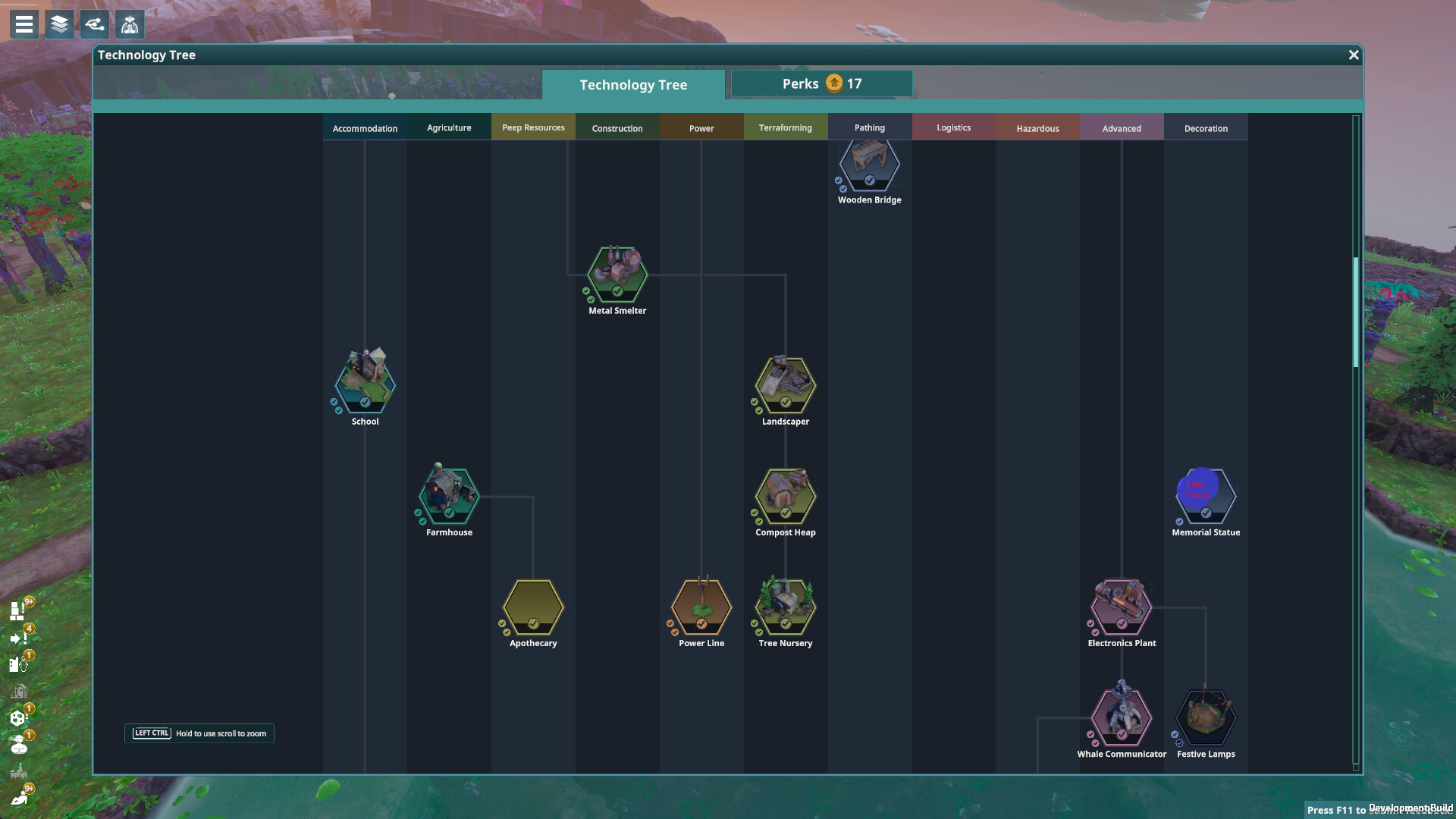
The tech tree that unlocks all of this is laid out in category tabs — Accommodation, Agriculture, Peep Resources, Construction, Power, Terraforming, Pathing, Logistics, Hazardous, Advanced and Decoration — so "what do I research next" is really "which of those problems is currently the loudest".
Adjacency effects with real numbers
This is the table to keep open while you plan a block. All of these are early-game effects straight from the official wiki:
| Building | Place it… | Effect |
|---|---|---|
| Water Pump | on an outcropping surrounded by 3 water tiles | +30% storage |
| Hut | next to 2 potato patches | +20% happiness |
| Woodcutter | surrounded by forest, except its road tile | +30% storage |
| Burner Generator | with 4 empty tiles around it (not fully enclosed) | −25% pollution |
| Early decorations | next to 2 other decorations (a triangle of 3) | +20% happiness each |
The general rule behind the specifics: most buildings get a bonus or penalty from what sits immediately next to them, and those effects touch production speed, storage, work slots, happiness, pollution and power draw. Placement is not flavor — it is a multiplier layer on your economy.
Reading the classic early block
The documented effects tell you what a good starting block looks like:
- Water Pump at the lake edge, hitting the 3-water-tiles arrangement if the shoreline allows.
- Huts beside potato patches — two patches per hut hit the +20% happiness pattern.
- Woodcutter inside the forest, road plugging the one gap. This also demonstrates the tradeoff: the forest gave you the building, so you'll carve outward as it thins.
- Generators on the edge with elbow room, letting the 4-empty-tiles rule shave pollution — and keeping smoke away from homes is good hygiene in general, because pollution drags on peep happiness and on Kewa's biome alike.
- Decorations in triangles, not lines. Three benches in a row give you nothing extra; three in a triangle give +20% each. The game rewards clusters everywhere.
What to keep apart
- Polluting industry vs. homes. Pollution has no upside for residents; give it a corner (ideally one where the generator itself can breathe for the −25%).
- Jobs vs. distant homes. The 16-tile work rule (see the beginner guide) means out-of-range housing is dead housing. When expanding, build homes with the next job site, not before it.
- Buildings vs. access. Roads plus footprints eat space, and the wiki warns that careless planning can wall peeps off from areas they need. Leave circulation gaps when you densify.
When a chain stalls, debug it backwards
- Find the building that looks idle (not producing).
- Check its inputs; check whether the supplier is paused or under-staffed.
- Check staffing: is any peep's home within 16 tiles?
- Check the supplier's own inputs — construction stalling usually starts two or three links up the chain.
- Only then consider rebuilding or replacing something.
Related reading
- Resources and production chains — what those buildings are actually making.
- Kewa care — why pollution is a whale-level problem, not just a mood penalty.
- Beginner guide — the first-hour build order this all slots into.